









A state-of-the-art steel design tool that lets structural engineers produce code compliant designs supported by comprehensive reports that reference the selected design standard and states all assumptions.
PROKON 5.3 Steel capabilities include:
- Column Splice
- Base Plate
- Bolt Group
- End Plate
- Strut
- Beam Column
- Weld Group
- Anchor Bolt
- Crane Beam
- Apex
- Cleat
- Combine
- Plate Girder
- Hollow Sections
- Fin Plate
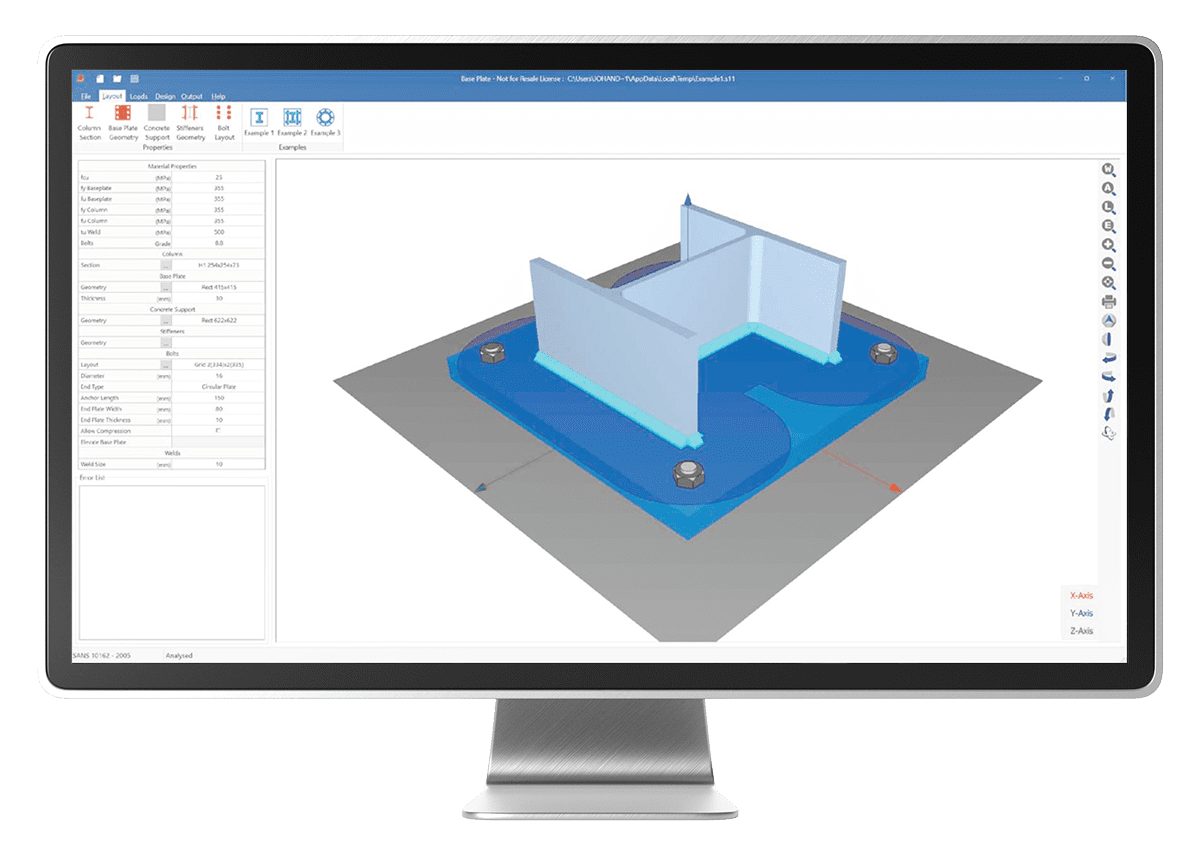
Input
Import section properties from a wide variety of international databases. See the graphics update in real-time to establish the most suitable layout.
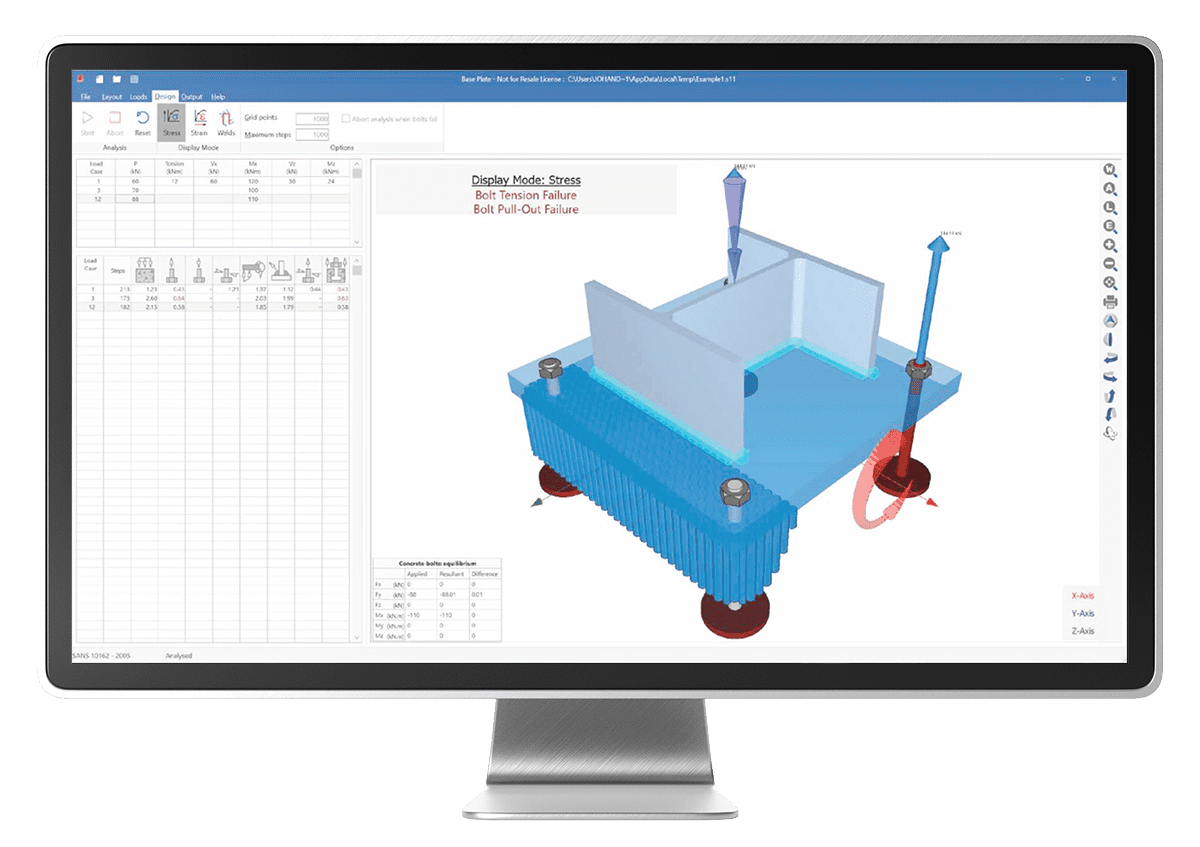
Design
Interactive diagrams provide insight into complicated structural behaviour.
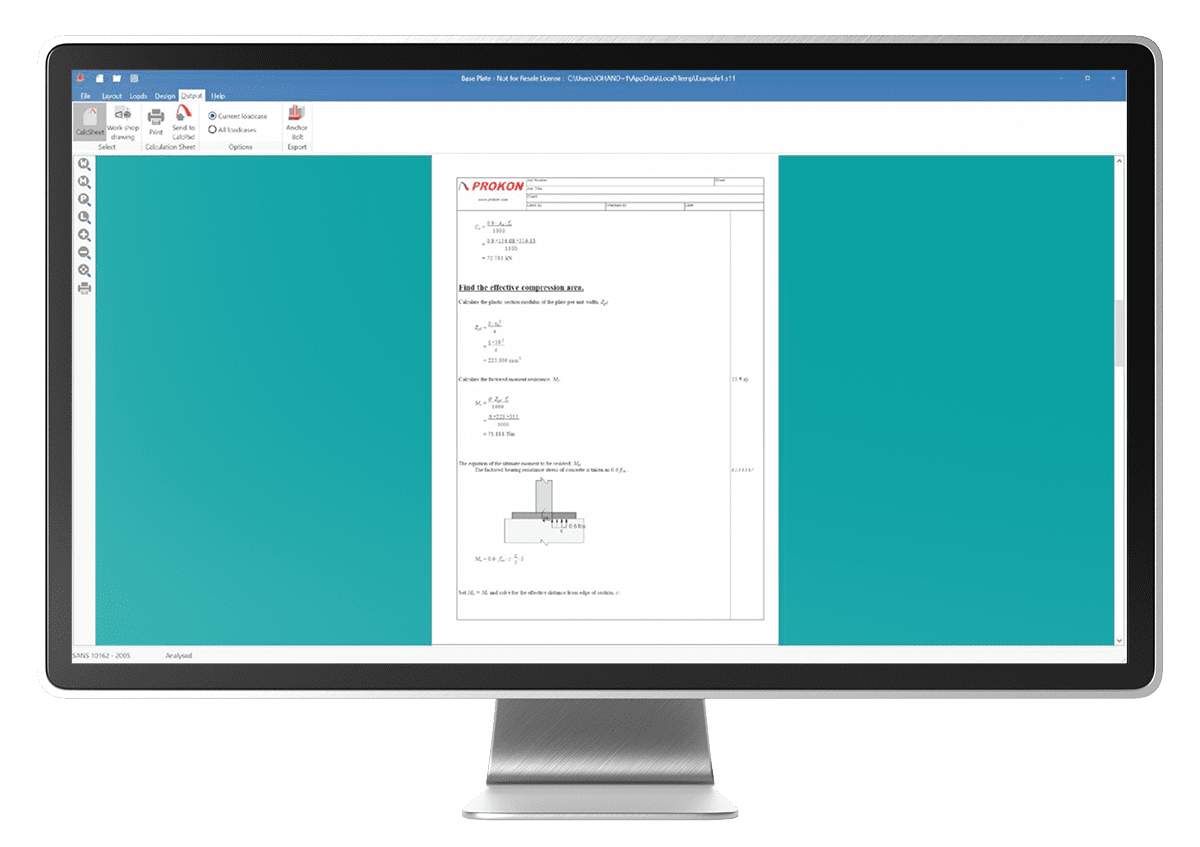
Output
The design report is compiled automatically and includes design assumptions, step-by-step procedures, and code references.
Benefits
The ultimate intuitive engineering software available on the market
Less ambiguity
Easy to understand
Reduction of manual work on the project
Familiar format of input for engineers
Example files are available to demonstrate the functionalities
Increases efficiency and accuracy
Reduction of human errors (Detailed calculations)
Performs single element checks (interactive design) and designs with detailed calculations.
Ability to generate optimal member sizes and connection layouts
Reduced requirement of additional detailers (Labour)
Greater control to the design engineer
Program layout follows the engineering workflow
Optimised design from analysis results based on material costs
Work anywhere
Ability to work in any country with an extensive range of design codes
Multi language
Allows the user to submit their reports in the preferred language for submission automatically
Key features
Model-based and stand-alone input
Design of headed, mechanical, and chemical anchors
Detailed weld analysis
Automated connection detail drawing
Design is done from the first principles
Catalogue Support
Different design approaches, e.g., check, evaluate, and optimise.
Detailed design report with code references and detailed calculations
Interpretive design graphic output
User-defined sections